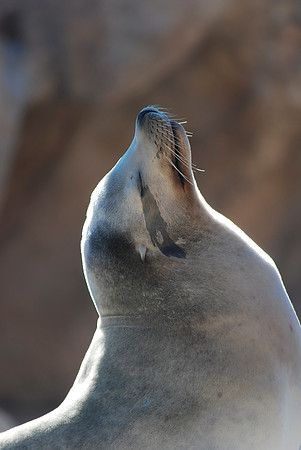
Rio Rancho Zoo, Albuquerque, New Mexico; Nov 14, 2007.
[shot through chain link] From Wikipedia:Sea lions are any of seven species in six genera of modern pinnipeds including one extinct one (the Japanese sea lion). Sea lions are characterized by the presence of external ear pinnae or flaps, long front flippers, and the ability to walk on four flippers on land. Their range extends from the subarctic to tropical waters of the global ocean in both the northern and southern hemispheres with the notable exception of the Atlantic Ocean. They are generally found in shallow waters of coastal areas of both with abundant food resources.Together with the fur seals, they comprise the Otariidae family, collectively known as eared seals. Until recently, sea lions were grouped under a single subfamily called Otariinae to distinguish them from the fur seals Arcocephalinae, based on the most prominent common feature between all species, namely the lack of dense underfur characteristic of the latter. Recent genetic evidence, however, strongly suggests that the Callorhinus, the genus of the Northern fur seal is more closely related to some sea lion species than to the fur seal genus Arctocephalus. Therefore the fur seal/sealion subfamily distinction has been largely eliminated. Nonetheless, all sea lions have certain features in common, in particular the coarse, short fur, greater bulk and larger prey than fur seals.