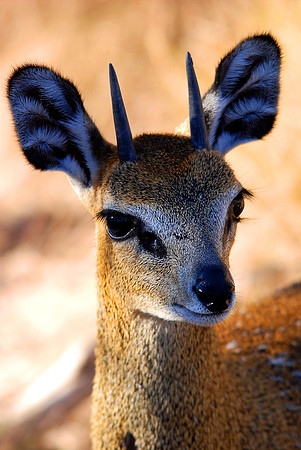
Rio Grande Zoo, Albuquerque, New Mexico; Nov 14, 2007.
From Wikipedia:The Klipspringer (literally "rock jumper" in Afrikaans), Oreotragus oreotragus, also known colloquially as a mvundla (from Xhosa "umvundla", meaning "rabbit"), is a small African antelope that lives from the Cape of Good Hope all the way up East Africa and into Ethiopia.
A pair of KlipspringersReaching approximately 58cm (22 inches) at the shoulder, Klipspringers are relatively small animals compared to some of their larger antelope cousins. Only the males have horns that are usually about 20-25cm (4-6 inches) long. They stand on the tips of their hooves.With a thick and dense speckled "salt and pepper" patterned coat of an almost olive shade, Klipspringers blend in well with the koppies (rock outcrops, pronounced "copies") on which they can usually be found.Klipspringers are herbivores, eating rock plants. They never need to drink, since the succulents they subsist on provide them with enough water to survive.The mating season for Klipspringers is from September through to January. The gestation period is about 214 days.