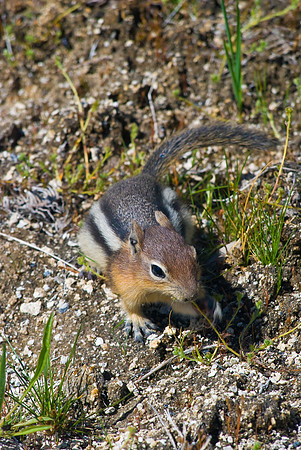
July 28, 2009; Upper Geyser Basin;Yellowstone National Park.
From Wikipedia:Chipmunks may be classified either as a single genus,
Tamias, or as three genera:
Tamias, which includes the
eastern chipmunk;
Eutamias, which includes the
Siberian chipmunk; and
Neotamias, which includes the 23 remaining, mostly western, species. These classifications are arbitrary, and most taxonomies[
citation needed] over the twentieth century have placed the chipmunks in a single genus. However, studies of
mitochondrial DNA show that the divergence between each of the three chipmunk groups is comparable to the genetic dissimilarity between
Marmota and
Spermophilus.
[1][2][3][4]Tamias is
Greek for "storer," a reference to the animals' habit of collecting and storing food for winter use.
[5]The common name originally may have been spelled "chitmunk," from the native
Odawa (Ottawa) word
jidmoonh, meaning "red squirrel" (
cf. Ojibwe,
ajidamoo)
[6] The earliest form cited in the Oxford English Dictionary (from 1842) is "chipmonk," but "chipmunk" appears in several books from the 1820s and 1830s.
[7] Other early forms include "chipmuck" and "chipminck," and in the 1830s they were also referred to as "chip squirrels," probably in reference to the sound they make. In the mid-1800s,
John James Audubon and his sons included a lithograph of the chipmunk in their
Viviparous Quadrupeds of North America, calling it the "Chipping Squirrel [or] Hackee."
[8] Chipmunks have also been referred to as "striped squirrels," "chippers," "munks," "timber tigers," or "ground squirrels," although the name "ground squirrel" usually refers to other squirrels, such as those of the genus
Spermophilus.