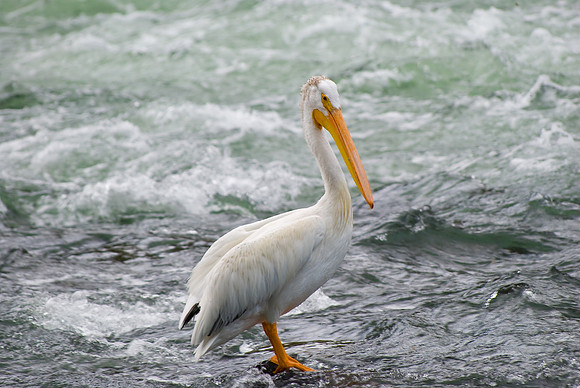
July 25, 2009; Pelican Creek;Yellowstone National Park.
From Wikipedia:Pelicans are a
genus of large
water birds comprising the
family Pelecanidae. They are characterised by a long
beak and large
throat pouch used in catching
prey and draining water from the scooped up contents before swallowing. They have predominantly pale plumage, the exceptions being the Brown and Peruvian Pelicans. The bills, pouches and bare facial skin of all species become brightly coloured before the breeding season. The eight living pelican species have a patchy global distribution, ranging
latitudinally from the
tropics to the
temperate zone, though they are absent from interior South America as well as from
polar regions and the open ocean. Fossil evidence of pelicans dates back at least 30 million years, to the remains of a beak very similar to that of modern species recovered from
Oligocene strata in France.
Long thought to be related to
frigatebirds,
cormorants,
tropicbirds,
gannets and boobies, pelicans are now known instead to be most closely related to the
Shoebill and
Hammerkop, and are placed in the order
Pelecaniformes.
Ibises,
spoonbills and
herons are more distant relatives, and have been classified in the same order. Pelicans frequent inland and coastal waters where they feed principally on fish, catching them at or near the water surface.
Gregarious birds, they hunt often cooperatively and breed
colonially. Four white-plumaged species tend to nest on the ground, and four brown or grey-plumaged species nest mainly in trees.
The relationship between pelicans and people has often been contentious. The birds have been persecuted because of their perceived competition with commercial and recreational fishers. They have suffered from habitat destruction, disturbance and environmental pollution, and three species are of conservation concern. They also have a long history of cultural significance in
mythology, and in Christian and
heraldic iconography.